Zoll Antiques
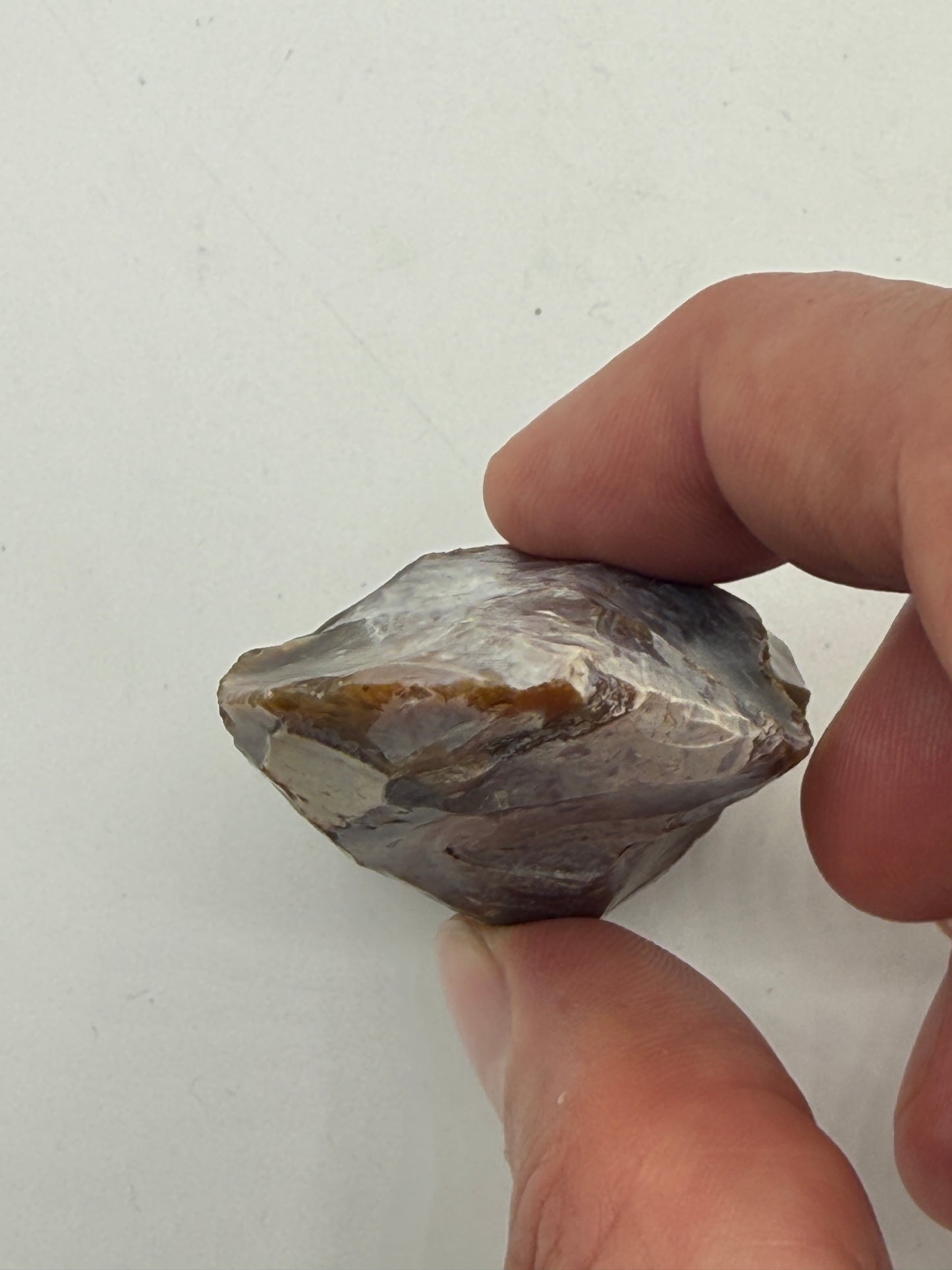
Danish Stone Age. Core axe with specialized edge, in flint. Hunter stone age: 8800-4800 B.C.
Danish Stone Age. Core axe with specialized edge, in flint. Hunter stone age: 8800-4800 B.C.
Couldn't load pickup availability
Danish Stone Age. Core axe with specialized edge, in flint. Hunter stone age: 8800-4800 B.C.
Provenance: Originates from old Danish antiquities collection.
Find site: Zealand/Fyn.
Literature: FLINT from Denmark's past. By Peter Vang Petersen. Page 98-99.
Measurements approx. : 8,5x4,3x2,5 cm.
Condition: see pictures.
The Maglemose culture was a hunter-gatherer culture in the early Mesolithic in South Scandinavia and Northern Germany, approx. 9000-6400 b.c. The name comes from a settlement on Zealand. The culture is known for flint tools, bone, and antler, as well as early signs of settlements near lakes and bogs.
Core axes were made from smaller, often irregular flint nodules, which were not suitable for other tools. The form emerged by hacking off excess flint along two side edges, and remnants of the original surface are often seen on the sides. The edge was formed early by opposite cross flakes, which met in a sharp ridge.
The core axes required less raw material and were easier to sharpen than the blade axes, and they dominated through the Maglemose-, Kongemose- and older Ertebølle periods. Wear and tear, as well as finds, show that they were used for wood processing, often hafted as cross-axes. The type disappears in the agricultural stone age.